Code: 58465
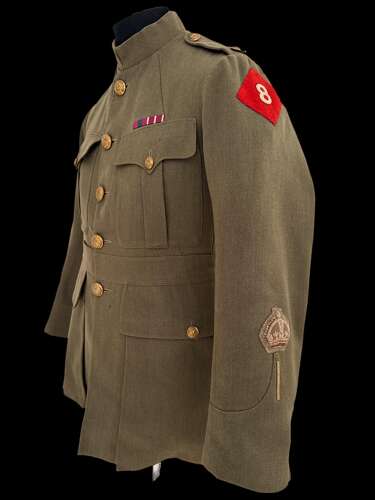
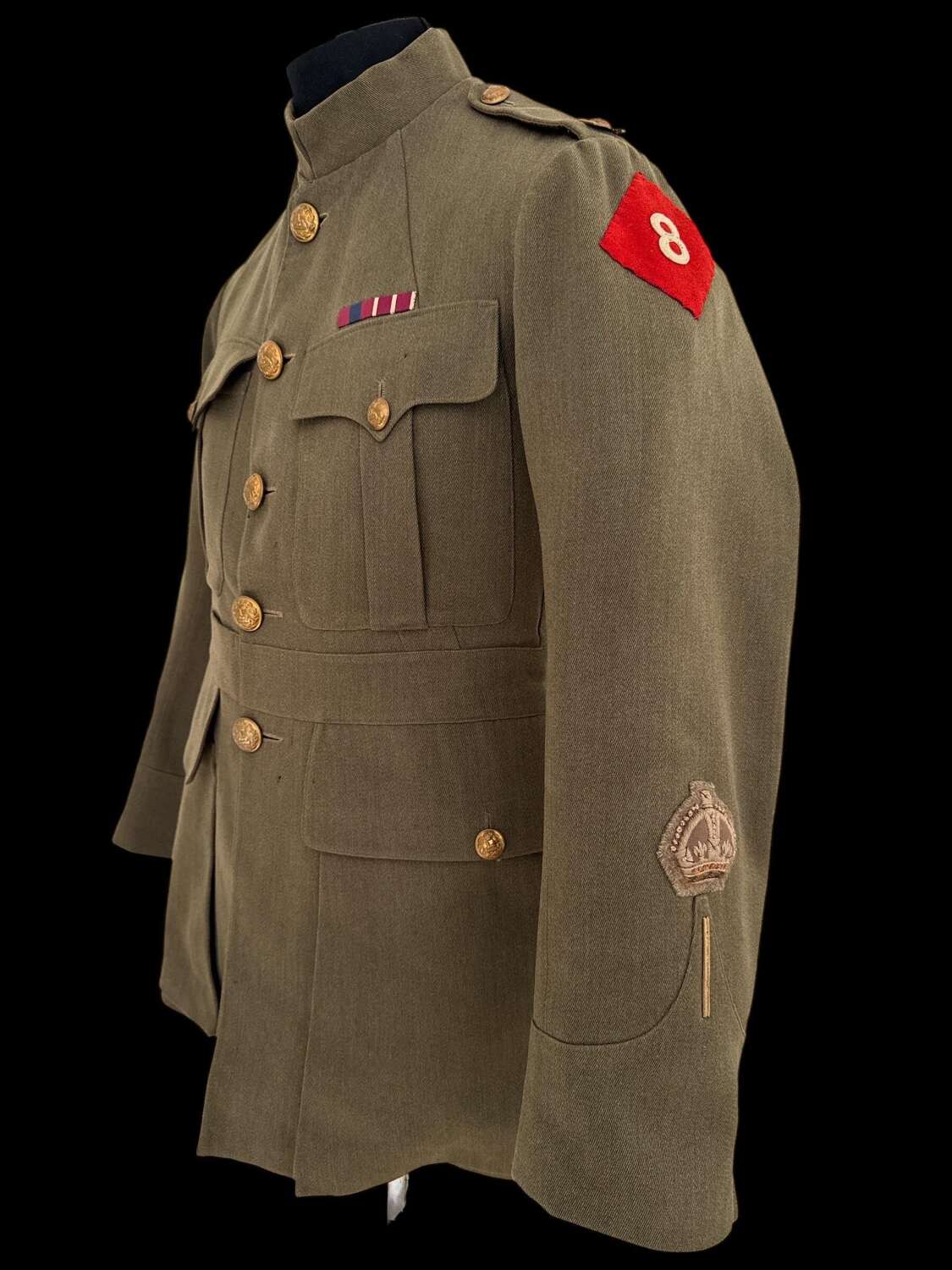
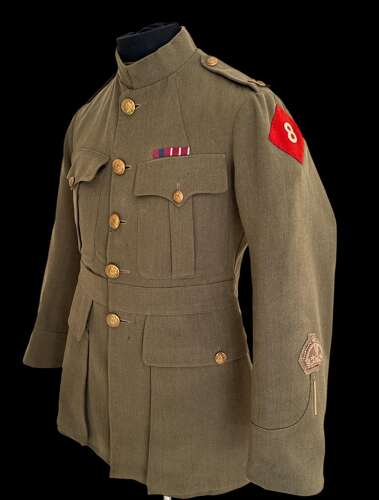
An exceptionally rare WW1 British Warrant Officer Pattern Tunic with Battle Insignia belonging to Company Serjeant Major William Fletcher DCM MSM of the 1/8th Battalion Lancashire fusiliers.
Warrant Officer Pattern Tunics such as this are by far the most difficult pattern of WW1 British tunics to source, far more difficult than the already rare Simplified Pattern Tunic. This because an Infantry Battalion of a thousand men only had 6 Warrant Officers within it for which this Special Pattern was designated.
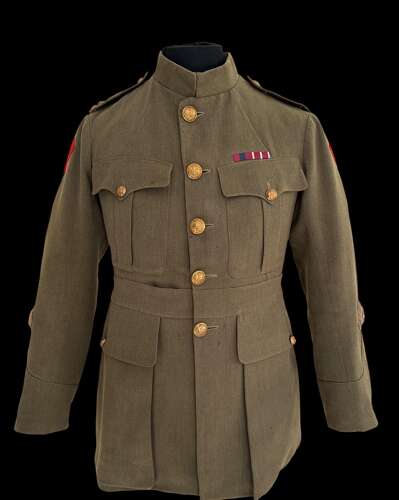
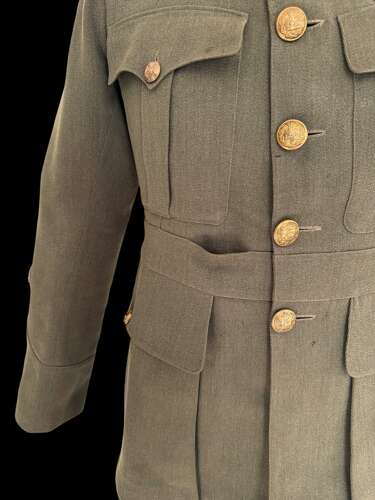
In keeping with the crossover rank of Warrant Officer, their Special Pattern is a hybrid of the Officer Pattern Tunic and the 1902 Pattern for Other Ranks, having elements of both. As befitting the status, the body of the Tunic is essentially of the Officer Pattern, however it has the closed collar of Other Ranks.
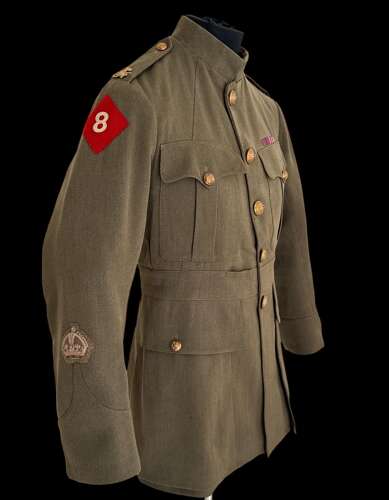
This particular Tunic is an early war manufactured example having the integrated cloth belt with watch pocket to the waist. From 1916 onwards this feature is steadily discontinued.
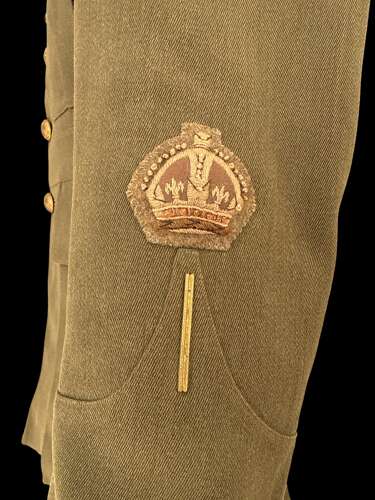
To each cuff is a WW1 large cloth crown for the rank of Company Serjeant Major. On the left cuff this is over a brass wound stripe indicating one wound in action.
Company Serjeant Major Fletcher is listed as wounded on the War Office Casualty List of the 20th of May 1918. With the time delay involved in such lists being compiled it indicates Fletcher was wounded during the defensive actions of early April 1918, a period when the 1/8th Lancashire Fusiliers took many casualties resisting the German Spring Offensive. The wound must have been not too serious however as Fletcher subsequently returned to the front to win the Distinguished Conduct Medal.
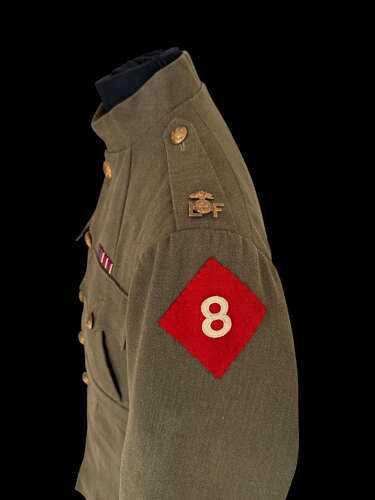
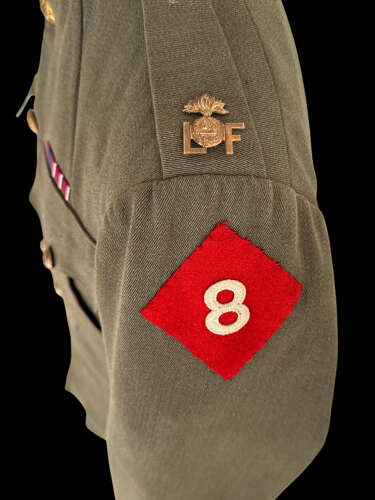
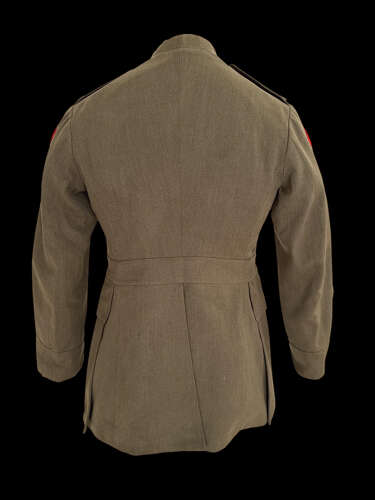
Further to this, originally applied to each upper sleeve is the important WW1 Battle Insignia patch of a red felt diamond with white number 8 of the 1/8th Lancashire Fusiliers in the 42nd East Lancashire Division.
The 1/8th Lancashire Fusiliers had a hard war. They were initially deployed to the notorious Gallipoli campaign, landing at Cape Helles under fire on the 5th of May 1915. They remained on the peninsula until the 28th of December losing two thirds of their strength in casualties there in the process.
In 1916 they deployed to Egypt for the hot Sinai desert and the Battle of Romani, then on the 27th of February 1917 they moved to the muddy trenches of the Western Front. There they were in action at the Battle of Passchendaele in 1917, the 1918 Battles of the Somme, the German Spring Offensive, the Battles of the Hindenburg Line and the Final Advance in Picardy.
Aside from the rare Battle Insignia and Attribution, the tunic is interesting in that it has been tailored with the hot climate options of removal buttons for easy laundering and the availability of having the collar worn open with ease when needed. This indicating perhaps it was initially tailored for the Gallipoli campaign where Lancashire Fusillier CSMs landed wearing wool tunics like this not KD cotton.
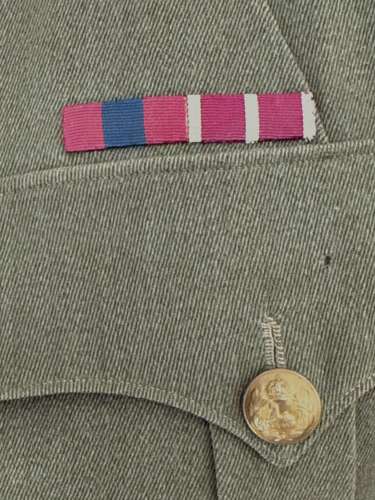
Above the left breast pocket are Fletcher’s Medal ribbons for the Distinguished Conduct Medal and Meritorious Service Medal. Fletcher is the only CSM in the 1/8th Lancashire Fusiliers to win both these medals in WW1.
The MSM was gazetted on the 17th June 1918. Taking into account the time delay for such publications this award no doubt relates to Fletcher’s worthy actions during the early part of the German Spring Offensive where he was wounded.
The DCM was gazetted on the 3rd of September 1918, with the delay in publication this would refer to actions during June/July, the tail end of Germany’s Spring Offensive.
Fletcher’s gazetted citation for the DCM reads:
“ Company Serjeant Major W.Fletcher 305066 (Salford).
For conspicuous gallantry and devotion to duty when he rallied stragglers and organised a defensive position with them.
His courage and initiative on several occasions was most marked. “
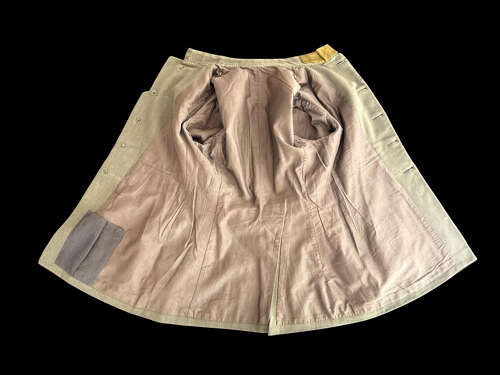
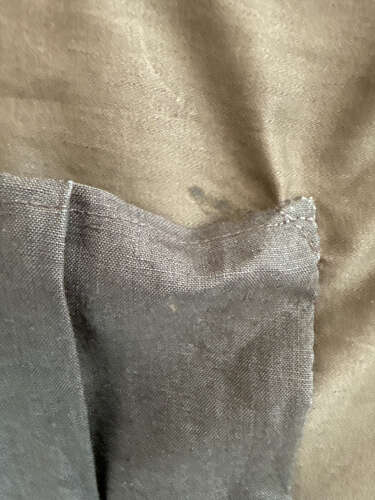
The Tunic is completed by a full set of Warrant Officer Lancashire Fusilier buttons and is fully lined with brown glazed cotton. Applied to the lower left as viewed is a combat field dressing pocket, this indicative of a tunic tailored for action. To the inside top of the field dressing pocket there is a small stain which appears to be dried blood, this perhaps created by a bloody hand reaching for the field dressing. It is however hard to tell.
There is general service wear throughout however overall condition is exceptional. I count two tiny moth specks, these no bigger than 1mm.
It is rather difficult to find images of these tunics in use as such Tunics were rare even at the time. I have a nice photo of a CSM wearing this on the Western Front in 1916 which I cannot publish due to copyright, I can however email it upon enquiry.
The rarest combat tunic worn by the British Army in WW1. This the only example I ever encountered.